

From Degeneracy to Diversified Wealth: Your Guide to Graduating from Meme Coins
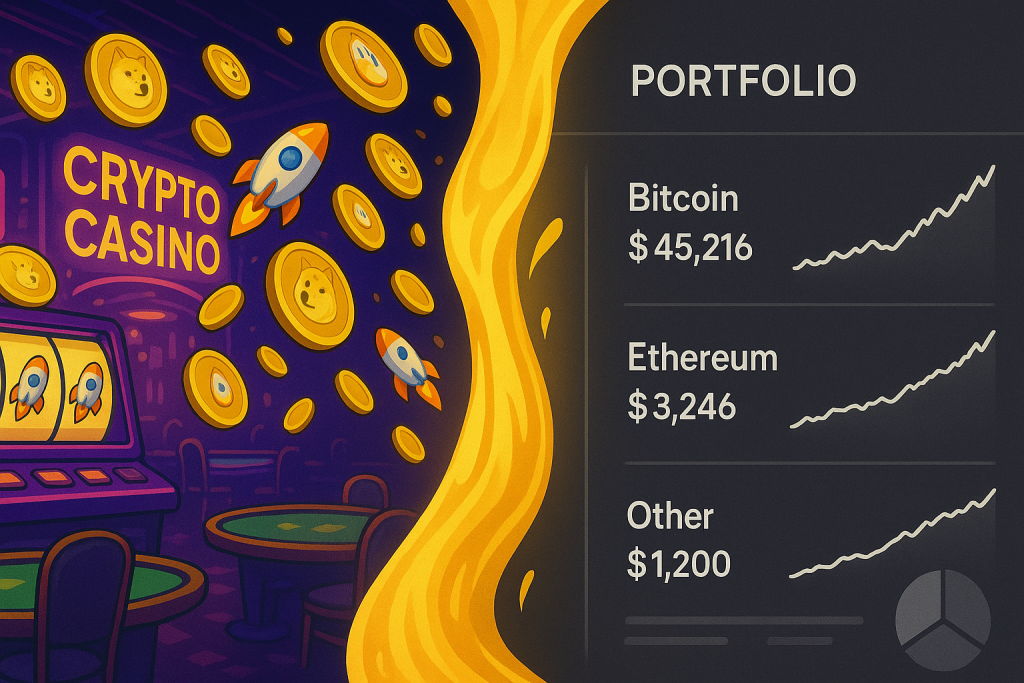
So you’ve been riding the meme coin wave, haven’t you? Maybe you caught that explosive 1575% run on PEPE or scored big on one of the countless Solana meme tokens that seem to pop up every hour. The adrenaline rush is real, the gains can be insane, and honestly? It’s addictive as hell.
But here’s the thing – and don’t get me wrong, I’m not here to rain on your parade – chasing meme tokens forever is like trying to build a house on quicksand. Sure, it’s thrilling when you’re winning, but meme coins are mostly a shot in the dark, and the vast majority will likely be defunct in a few years or months.
The truth is, if you’ve made some decent money on meme coins, you’re at a crossroads. You can keep rolling the dice on the next dog coin or frog token, or you can start building something that’ll actually last. Let me walk you through how to make that transition without losing your edge – or your sanity.
From Degenerate to Diversified: Why Your Portfolio Needs to Grow Up
Look, I get it. Traditional investing feels boring compared to watching your portfolio swing 50% in either direction before lunch. But that familiar mix of awe and unease you feel when your meme bag gets obliterated? That’s your portfolio telling you it needs some stability.
The meme coin market has grown massive – Dogecoin alone sits at a $35.91B market cap, with Shiba Inu at $8.97B and PEPE at $6.12B. These aren’t just jokes anymore; they’re serious money. But here’s what most people miss: the smart money doesn’t keep everything in memes.
Think about it this way – meme coins got you in the door, but they shouldn’t be the only room in your crypto house. You’ve proven you can spot trends and take risks. Now it’s time to use those skills to build something sustainable.
The shift isn’t about abandoning your degen roots entirely. It’s about evolution. You’ve learned to read charts, understand market sentiment, and most importantly, you’ve developed that sixth sense for when something’s about to moon or crater. These skills translate perfectly to mainstream crypto investing – you just need to know where to point them.
Taking Stock: Converting Meme Profits into Digital Gold
Here’s where things get practical. If you’ve made gains on meme coins, the smartest move isn’t to YOLO everything into the next moonshot. Instead, consider this your graduation ceremony from pure speculation to strategic wealth building.

Bitcoin is hitting new all-time highs, trading at over $106,000 as of June 2025, driven by institutional interest that’s only getting stronger. Meanwhile, Ethereum sits around $2,700, still commanding the throne when it comes to smart contracts and DeFi applications.
The beauty of taking profits from your meme wins and parking them in BTC, ETH, or SOL is that you’re not giving up on crypto – you’re just switching from gambling to investing. These aren’t going to give you 1000x overnight, but they’re also not going to disappear because someone got bored with the meme.
A reasonable approach might look something like this: allocating 50% to Bitcoin and Ethereum to ensure stability, 30% to mid-sized cryptocurrencies like Solana, and 20% to new or smaller projects. This gives you that stability foundation while keeping some room for higher-risk, higher-reward plays.
But that’s just it – you don’t have to go cold turkey on the excitement. The key is proportion. Keep a small allocation for your meme plays, but build the bulk of your portfolio on assets that have proven staying power.
Learning Fundamentals: What Actually Matters Beyond the Hype
This is where most meme coin traders struggle, and I don’t blame them. When you’re used to buying based on memes and vibes, suddenly having to analyze things like tokenomics, development activity, and real-world utility can feel overwhelming.
Let me break it down simply. When you’re looking at mainstream crypto projects, you’re essentially asking three questions:
What problem is this solving? Unlike meme coins that exist purely for speculation, solid projects tackle real issues in finance, technology, or digital ownership. Ethereum processes smart contracts. Solana offers fast, cheap transactions. Bitcoin provides digital scarcity and store of value properties.
Who’s building it and using it? Look for active development teams, regular updates, and actual usage. This isn’t about Twitter followers or Discord members – it’s about developers committing code, users transacting on the network, and businesses building on the platform.
Is there a sustainable economic model? The best crypto projects have clear mechanisms for value accrual. Bitcoin’s supply cap creates scarcity. Ethereum burns fees, reducing supply. Many DeFi protocols generate revenue from transaction fees.
The truth is, learning these fundamentals isn’t that different from what you already do with meme coins. You research communities, track developer activity (or lack thereof), and watch for momentum shifts. You’re just applying those same instincts to projects with more substance behind them.
New Avenues: Beyond Coins into the Broader Crypto Ecosystem
Here’s where things get interesting. Once you start diversifying beyond pure speculation, you realize crypto is way bigger than just buying tokens and hoping they moon. There are entire sectors you can explore that combine the innovation of crypto with actual utility.
DeFi (Decentralized Finance) is probably the most obvious next step. Instead of just holding tokens, you can put your crypto to work. Lending protocols let you earn yield on your holdings. Liquidity pools can generate trading fees. Yield farming strategies can compound your returns over time.
The beautiful thing about DeFi is that it rewards the same kind of active management skills you’ve developed in meme trading. You need to monitor yields, understand protocol risks, and move quickly when opportunities arise. But instead of betting on whether a dog coin will pump, you’re earning consistent returns on legitimate financial services.
NFTs and digital collectibles represent another avenue worth exploring. While the 2021 NFT craze has cooled off, the space has matured significantly. Gaming NFTs, utility-based projects, and digital art continue to find real use cases and sustainable communities.
Layer 2 solutions and infrastructure plays offer exposure to crypto’s growth without the volatility of smaller tokens. Projects building the pipes and infrastructure for crypto’s future often see steady, sustainable growth as adoption increases.
The key insight here is that your meme coin experience has taught you to spot communities, understand narrative, and recognize when something is gaining traction. These skills are incredibly valuable in evaluating DeFi protocols, NFT projects, and infrastructure plays.
Portfolio Rebalancing: Making Memes a Spice, Not the Main Course
Let’s talk numbers, because that’s what actually matters. If meme coins currently make up 80% of your portfolio, we need to have a serious conversation about risk management.
Investing in cryptocurrencies with various use cases or functions is one approach to diversifying your crypto portfolio. The goal isn’t to eliminate risk – it’s to manage it intelligently.
A mature crypto portfolio might look something like this:
40% in established assets (BTC, ETH) – These are your foundation. They’re not going to make you rich overnight, but they’re also not going to zero overnight. They provide stability and steady growth potential.
30% in promising mid-caps (SOL, AVAX, MATIC, etc.) – These have more upside potential than the giants but are still backed by real technology and adoption. They’re the sweet spot between safety and growth.
20% in emerging opportunities (DeFi protocols, Layer 2s, specific sector plays) – This is where you apply your research skills to find the next big thing before it becomes obvious.
10% in high-risk, high-reward plays (including your favorite meme coins) – Keep some room for the degenerate plays that got you here. Just make sure they can’t sink your entire portfolio if they go to zero.
The beauty of this approach is that you’re not abandoning what works. You’re just putting it in context. That 10% meme allocation can still deliver life-changing returns if you hit it right, but now it won’t destroy everything you’ve built if you hit it wrong.
Long-Term Mindset: From Quick Gains to Lasting Wealth
This is probably the hardest part of the transition, and I’m not going to sugarcoat it. Shifting from the instant gratification of meme trading to the patience required for long-term wealth building requires a fundamental mindset change.
But here’s what I’ve learned watching traders make this transition successfully: you don’t have to choose between excitement and stability. The best crypto investors keep a small allocation for high-risk plays while building the majority of their wealth through steady, compounding growth.
With advancements in blockchain technology and rising institutional adoption, the crypto space is maturing rapidly. The opportunities for sustainable wealth building are better now than they’ve ever been.
Think about it this way – in traditional markets, the biggest fortunes are built by people who buy great companies and hold them for decades. Crypto is starting to offer similar opportunities. The infrastructure is being built, the regulatory environment is clarifying, and institutional money is flowing in.
Your meme coin experience has taught you something most traditional investors lack: comfort with volatility and ability to act quickly on opportunities. These are massive advantages in crypto, but they’re most powerful when combined with patience and strategic thinking.
The Path Forward: Practical Steps to Make the Transition
Alright, enough theory. Let’s talk about how to actually make this happen without completely changing who you are as a trader.
Step 1: Take inventory. Look at your current portfolio honestly. How much is in memes versus everything else? If it’s heavily skewed toward speculation, start planning your rebalancing strategy.
Step 2: Set up dollar-cost averaging into major assets. Instead of trying to time the market perfectly, commit to buying a set amount of Bitcoin and Ethereum regularly. This smooths out volatility and builds your foundation steadily.
Step 3: Research one new sector deeply. Pick DeFi, Layer 2s, gaming tokens, or infrastructure plays. Spend the same energy you used to spend researching the next meme coin on understanding a sector that has lasting potential.
Step 4: Keep your edge. Don’t abandon what makes you a good trader. Keep that 10% allocation for high-risk plays. Use your community connections and trend-spotting abilities. Just make sure they’re working within a broader strategy.
Step 5: Track everything. Start measuring your portfolio’s performance not just in terms of peak gains, but in terms of risk-adjusted returns and steady growth. This will help you see the value of diversification over time.
The truth is, making this transition doesn’t mean becoming a boring investor. It means becoming a smarter one. You’re taking all the skills that made you successful in meme trading and applying them to building lasting wealth.
Conclusion: The Best of Both Worlds
Look, I’m not here to tell you that meme coins are evil or that you should never touch them again. Some of the most successful crypto investors I know still keep a small portion of their portfolio in high-risk, high-reward plays. The difference is that they’ve built a foundation that can survive even if those plays go to zero.
Young Americans are increasingly investing in volatile meme coins as conventional paths to financial security feel out of reach. But the smart ones are using those gains as stepping stones to something bigger.
Your journey from meme coins to mainstream crypto investing isn’t about abandoning your roots – it’s about building on them. You’ve already proven you can navigate the wildest corners of crypto and come out ahead. Now it’s time to use those skills to build something that will last.
The crypto space is evolving rapidly, with projections suggesting massive growth in AI agents, tokenized assets, and institutional adoption. The opportunities for long-term wealth building have never been better, but they require a different approach than pure speculation.
Don’t get me wrong – keep some skin in the meme game if that’s what keeps you engaged. But make sure it’s part of a broader strategy that can weather any storm and compound wealth over time.
The best crypto investors aren’t the ones who hit the biggest single trade. They’re the ones who consistently grow their wealth across multiple cycles, learning and adapting while maintaining their edge. You’ve already got the edge – now build the foundation to make it last.
Good luck out there, and remember: evolution isn’t about abandoning what works. It’s about making what works even better.