

Copy Trading Psychology: Why 90% of Traders Fail (And How You Can Avoid Their Mistakes)

The Illusion of Easy Money
Here’s a question that should make you uncomfortable: If copy trading is supposed to make crypto trading easier, why are 90% of copy traders still losing money?
You’d think the math would be simple, right? Find a profitable wallet, mirror their moves, collect your gains. It’s like having a trading mentor who never sleeps, never gets tired, and has already done the heavy lifting for you. Yet platforms like eToro report that the vast majority of copy traders underperform, and anecdotal evidence from Solana degen copy trades tells an even grimmer story.
The brutal truth? Copy trading isn’t broken — your psychology is.
The real question isn’t whether copy trading works (it can). The question is: Are you blindly following success, or are you understanding the strategy behind it? Because there’s a massive difference between the two, and that difference determines whether you’ll be part of the 10% who profit or the 90% who don’t.
Let’s dive into why most people get this spectacularly wrong — and more importantly, what you can do instead.
The ‘Set It and Forget It’ Myth
“Isn’t copy trading supposed to be hands-off?”
This might be the most expensive misconception in crypto. Somewhere along the way, copy trading got marketed as the ultimate passive income strategy. Set it up, walk away, and let the profits roll in while you sleep. It sounds beautiful, doesn’t it?
Here’s the reality: Copy trading requires active mental engagement, even when you’re not actively trading.
Think of it like this — you wouldn’t hire a financial advisor and then never check your portfolio, would you? Yet that’s exactly what most copy traders do. They find a hot wallet, allocate their funds, and then mentally check out. They treat it like a savings account that magically grows.
The problem with emotional detachment is that it breeds neglect. And neglect in volatile markets doesn’t just hurt — it kills portfolios.
When you’re not mentally engaged with what you’re copying, you miss crucial context. You don’t notice when the trader’s strategy shifts. You don’t catch warning signs that their recent wins might be unsustainable. You don’t realize when market conditions change in ways that make their approach obsolete.
The fix: Stay engaged, not obsessed. Set up regular check-ins. Understand the reasoning behind the trades you’re copying. Treat the wallet you’re following like a business partner, not a slot machine.
Chasing Green Candles — The FOMO Trap
“How do I know when it’s the right time to follow a wallet?”
Picture this scenario: You see a wallet that just hit a 10x on some obscure memecoin. Your Twitter feed is blowing up about it. The wallet’s performance chart looks like a rocket ship. So naturally, you start copying them immediately.
Congratulations — you just bought the top.
Copying a wallet three pumps deep is like showing up at a party after everyone’s passed out. Sure, there might still be some fun to be had, but you missed the main event, and now you’re stuck cleaning up the mess.
This is FOMO dressed up in copy trading clothes. You’re not following a strategy; you’re chasing green candles with extra steps. And just like regular FOMO trading, it has a predictable ending: you buy high, watch it crash, and then blame the wallet you were copying.
The green candle trap works like this:
- Wallet has massive win
- Gets attention and new copiers
- Next few trades are normal (or losses)
- New copiers panic and leave
- Wallet continues their normal strategy
- New copiers miss the actual consistent gains
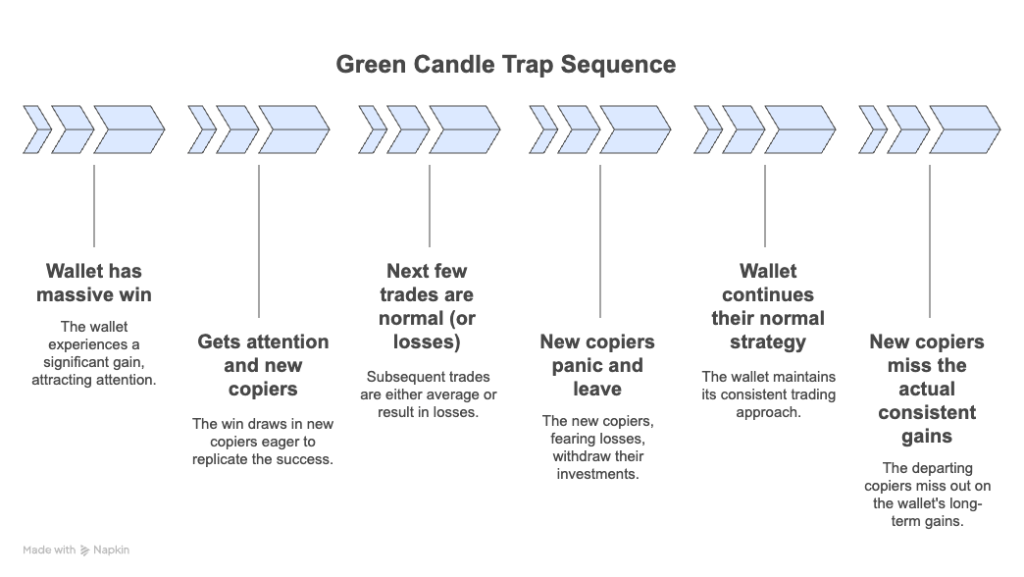
The fix: Look for consistency over explosiveness. A wallet that makes 20% monthly for six months is infinitely more valuable than one that made 1000% last week. Track their longest losing streaks, not just their biggest wins. And for the love of Satoshi, never start copying immediately after a massive pump.
Overconfidence from Borrowed Conviction
“Should I trust the trader I’m copying, or add my own logic?”
Here’s where copy trading gets psychologically weird. You’re simultaneously trusting someone else’s judgment while trying to maintain your own sense of control. It’s like being a passenger in a car while trying to steer from the backseat.
Most copy traders develop what I call “borrowed conviction” — they feel confident about trades they don’t actually understand because someone else made them. This creates a dangerous psychological mismatch.
When the wallet you’re copying enters a position, you feel smart by association. When it pumps, you feel like a genius. But when it dumps? That borrowed conviction evaporates instantly because it was never really yours to begin with.
Without personal conviction, you panic at the first sign of red.
You start second-guessing every move. You wonder if the trader knows something you don’t (they probably do, but that’s the point). You begin overriding their decisions with your own amateur analysis. Congratulations — you’ve just turned copy trading into regular trading, except now you’re fighting two strategies instead of following one.
The fix: Develop understanding, not just trust. Before copying a wallet, study their approach until you can explain their strategy to someone else. You don’t need to become an expert, but you need enough conviction to weather the inevitable storms. If you can’t handle their drawdowns, you don’t deserve their gains.
Misaligned Risk Tolerance
“How do I match my risk profile with a trader I follow?”
This one’s crucial, so pay attention. The wallet you’re copying might be playing with house money from previous wins. They might have a $2 million portfolio where a $100k loss is just another Tuesday. You might be risking your rent money on their latest YOLO play.
Risk tolerance isn’t just about money — it’s about sleep, stress, and sanity.
Ask yourself this question: “If this trade dropped 50% tomorrow, would I still sleep at night?” If the answer is no, you’re overexposed, regardless of how confident you are in the trader.
Here’s a mini self-assessment before you start copying any wallet:
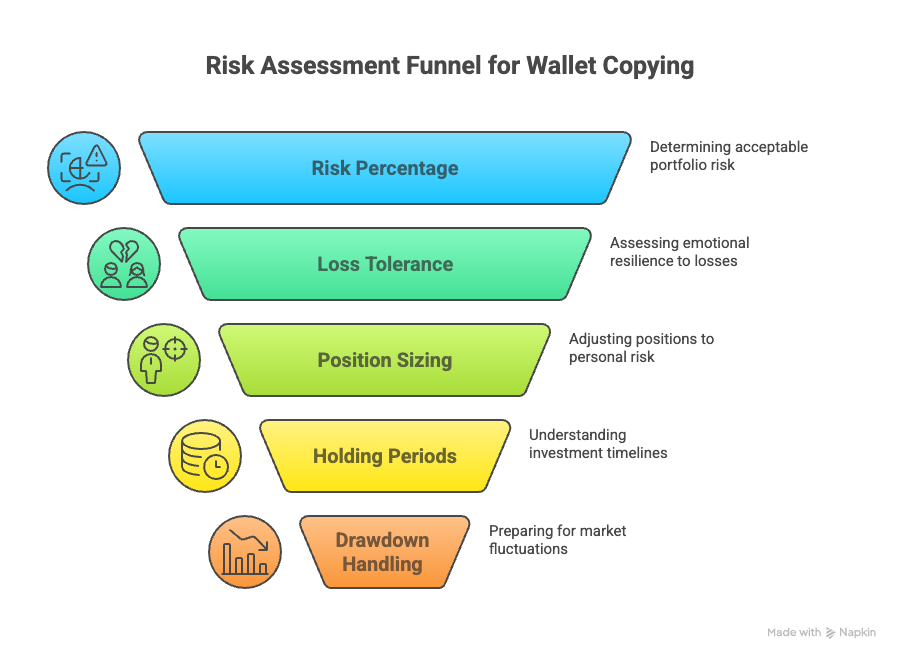
- What percentage of your portfolio are you risking?
- How many consecutive losses can you handle before you bail?
- Are you copying their position sizes or scaling to your own risk level?
- Do you understand their typical holding periods?
- Can you emotionally handle their normal drawdown periods?
The biggest mistake: Copying position sizes without adjusting for your own portfolio size and risk tolerance. Just because they’re putting 10% into a memecoin doesn’t mean you should too — especially if your “10%” represents next month’s groceries.
The fix: Scale everything to your own situation. A good trader’s strategy can work at multiple position sizes, but your peace of mind only works at one risk level — yours.
The Addiction to Leaderboards
“Should I always follow the top-ranked traders?”
Leaderboards are dopamine crack for copy traders. There’s something intoxicating about following the #1 wallet, like you’re getting insider access to some exclusive trading club.
But here’s what leaderboards don’t tell you: past performance has an expiration date, and it’s usually shorter than you think.
That #1 wallet might have gotten there through one massive YOLO bet on a memecoin that caught lightning in a bottle. They might be riding a hot streak that’s about to turn cold. They might be taking risks that are unsustainable long-term.
Just because a wallet was #1 this week doesn’t mean they won’t get liquidated next week.
The leaderboard trap works like this:
- Top wallet takes massive risk
- Gets rewarded with massive gain
- Attracts new copiers
- Continues taking massive risks (because it worked)
- Eventually hits a massive loss
- New copiers get wiped out
- Wallet rebuilds with smaller size
- Cycle repeats
The fix: Ignore the leaderboards. Look for consistency over short-term performance. Find wallets that have survived multiple market cycles, not just the current bull run. And remember — sometimes the best wallets are the ones that aren’t trying to be #1.
Not All Wins Are Repeatable
“How do I spot luck vs. skill in a trader’s history?”
Anyone can hit a half-court shot once. That doesn’t make them Steph Curry.
The same principle applies to trading wallets. One massive win doesn’t indicate skill — it might just indicate risk-taking that happened to pay off. The question is: can they do it consistently?
Here’s how to separate luck from skill:
Luck looks like:
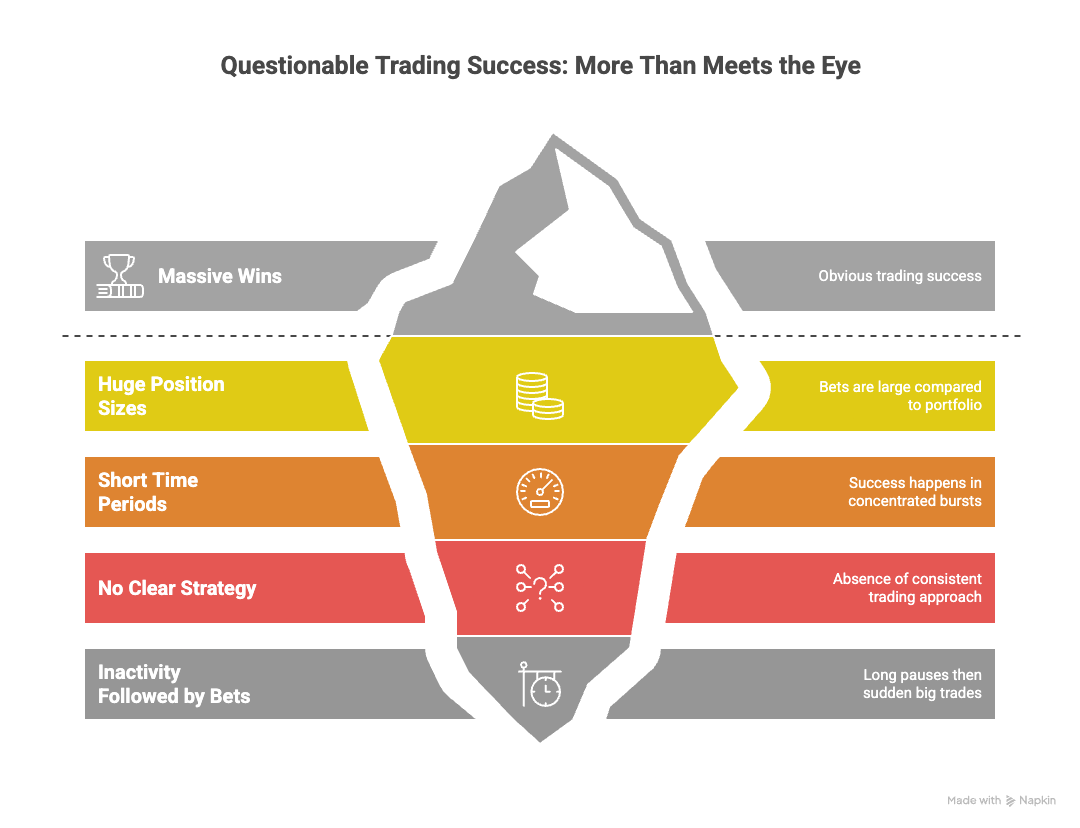
- One or two massive wins carrying the entire performance
- Huge position sizes relative to portfolio
- Success concentrated in very short time periods
- No clear strategy or consistency in trade selection
- Long periods of inactivity followed by sudden big bets
Skill looks like:
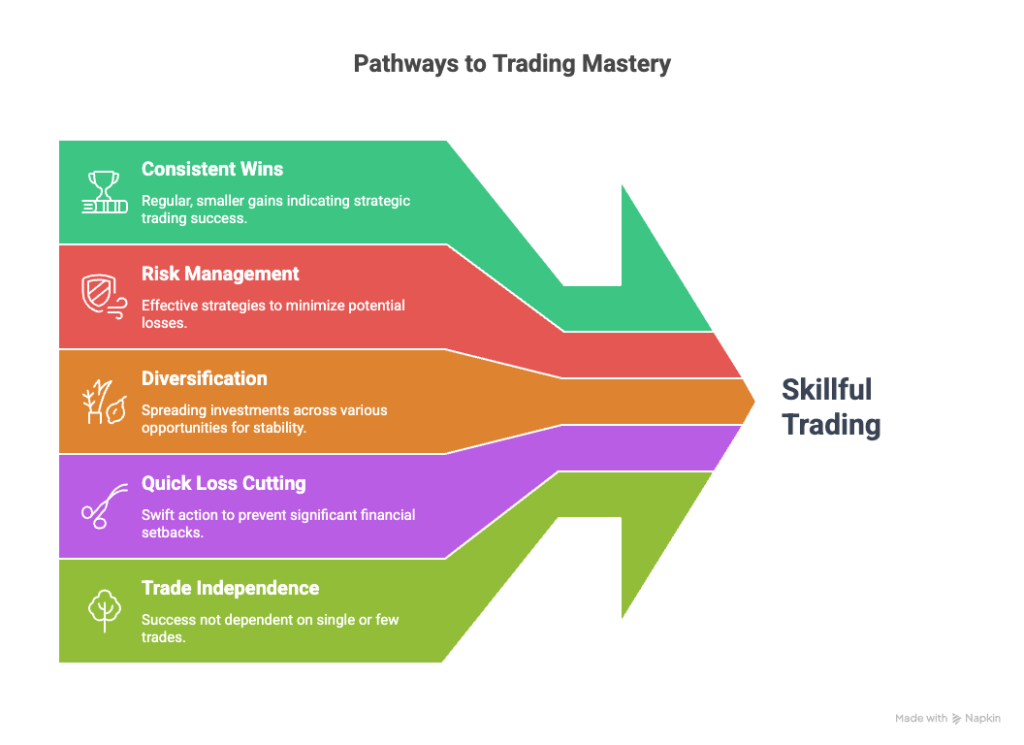
- Consistent smaller wins over time
- Clear risk management principles
- Diversified approach across different opportunities
- Ability to cut losses quickly
- Performance that doesn’t rely on one or two trades
The easiest test: Remove their biggest win from their track record. Are they still profitable? If not, you’re probably looking at lucky timing, not sustainable skill.
The fix: Focus on traders who win through process, not just outcomes. Look for evidence of discipline, risk management, and adaptability. And always remember — even skilled traders have losing streaks. The difference is how they handle them.
Emotional Copying — When You Start Copying Reactions
“Should I also exit when the wallet exits, or wait?”
This is where copy trading gets psychologically advanced — and where most people lose their minds.
You start copying a wallet, and suddenly you’re not just copying their trades. You’re copying their emotions. You watch every move they make after you copy them. When they exit early, you panic. When they hold through a dip, you second-guess. When they add to a position, you wonder if you should too.
You’ve become emotionally dependent on someone else’s decision-making in real-time.
This creates a dangerous lag effect. By the time you see their move and react to it, the opportunity (or the need to exit) might already be gone. You’re always one step behind, like trying to dance to music that’s slightly out of sync.
The lag effect kills copy traders because:
- You see their exit after they’ve already executed
- You make emotional decisions based on incomplete information
- You override the original strategy with real-time reactions
- You turn systematic copying into reactive trading
The fix: Set your rules before you start copying, not during. Decide in advance how you’ll handle different scenarios. Will you copy every move exactly? Will you set your own exit rules? Will you hold longer or shorter than they do? Make these decisions when you’re calm, not when you’re watching red candles in real-time.
Mind Over Metrics
Here’s what this all comes down to: Copy trading isn’t about finding the perfect wallet — it’s about perfecting your mindset while following imperfect humans.
The wallets you’re copying aren’t prophets. They’re just degen humans with bigger bags and (hopefully) better processes. They make mistakes. They have bad days. They sometimes get lucky, and sometimes they don’t.
Your job isn’t to find someone who never loses. Your job is to find someone whose approach you can understand, whose risks you can handle, and whose strategy you can stick with through both the wins and the losses.
The real reasons why 90% of copy traders fail:
- They treat it like passive income instead of active learning
- They chase performance instead of understanding process
- They copy without context and exit without conviction
- They misalign their risk tolerance with someone else’s strategy
- They let emotions override the systematic approach that attracted them in the first place
The 10% who succeed do this differently:
- They engage mentally even when they’re not actively trading
- They understand the strategy behind the trades they copy
- They scale positions to their own risk tolerance
- They focus on consistency over short-term performance
- They make decisions based on process, not emotions
Your action plan: Stop auditing just your trades. Start auditing your behavior. Are you copying like an investor or gambling like a tourist? Are you following a process or chasing green candles? Are you managing risk or just hoping for the best?
The market doesn’t care about your intentions. It only cares about your actions. And your actions are determined by your psychology, not your strategy.
Remember:
❝Copying without context is gambling with training wheels.❞
❝You’re not just trading coins. You’re trading emotions.❞
❝Stop copying traders like they’re prophets — they’re just degen humans with bigger bags.❞
Want to copy trade smarter, not harder? The first step isn’t finding a better wallet to follow. It’s developing a better mindset to follow it with. The best place to start is with a like minded community like Degen Meme Calls where you not only get the community support but also all the tools to become a successful copy trader.
Frequently Asked Questions
What is the failure rate of copy trading? Studies suggest that 80-90% of copy traders lose money over time, similar to retail trading in general. The difference is that copy trading gives people false confidence that they’re following a “proven” strategy, which can lead to larger position sizes and bigger losses.
Is copy trading actually profitable? Copy trading can be profitable, but only if you approach it with the right mindset and risk management. The tools work, but most people use them incorrectly. Profitability depends more on your psychological discipline than the wallet you choose to follow.
How can I tell if a wallet is worth copying? Look for consistency over flashiness. Check their longest losing streaks, not just biggest wins. Make sure their strategy is diversified and their risk management is clear. Most importantly, make sure you can understand and stick with their approach during both good and bad periods.
Should I copy every move of a wallet? Not necessarily. You should copy their strategy and approach, but scale position sizes to your own risk tolerance. Some moves might not make sense for your situation, and that’s okay. The key is being systematic about what you copy and what you modify.
How much money should I start copy trading with? Start small — no more than 5-10% of your total portfolio until you understand how both the strategy and your own psychology work together. Many successful copy traders started with amounts they could afford to lose completely while they learned the ropes.
Is copy trading legal and safe? Copy trading is legal in most jurisdictions, but regulations vary. The bigger risk is not legal but financial — you’re still responsible for your own losses. Make sure you understand the risks and never invest more than you can afford to lose.
Can I automate copy trading on Solana, Base, or other L2s? Various tools and platforms offer copy trading automation on different blockchains. However, automation increases the importance of understanding what you’re copying, since you’ll have less control over individual trades. Always test with small amounts first and ensure you understand the platform’s execution mechanisms.
For the team at Degen Meme Calls our favourite copy trading bot to use for the best chance of profits is TradeWiz. It’s tried and tested and has the best features along with the fastest transactions when it comes to copy trading.