
PumpFun vs Raydium
The memecoin ecosystem on Solana is heating up with the launch of Pumpswap by Pump Fun and the upcoming LaunchLab by Raydium. As both platforms race to dominate the decentralized memecoin launchpad space, traders and creators alike are weighing the pros and cons. This article explores the battle between Pumpswap and LaunchLab, comparing features, fees, and potential impact on the DeFi landscape.
What Is Pumpswap and Why It Matters
Pumpswap is a memecoin-centric decentralized exchange (DEX) created by the team behind Pump Fun. Built on the Solana blockchain, Pumpswap is designed to provide users with a seamless experience for launching and trading memecoins. What sets it apart is its integration with the original Pump Fun launchpad and its competitive fee structure.
Key features of Pumpswap include:
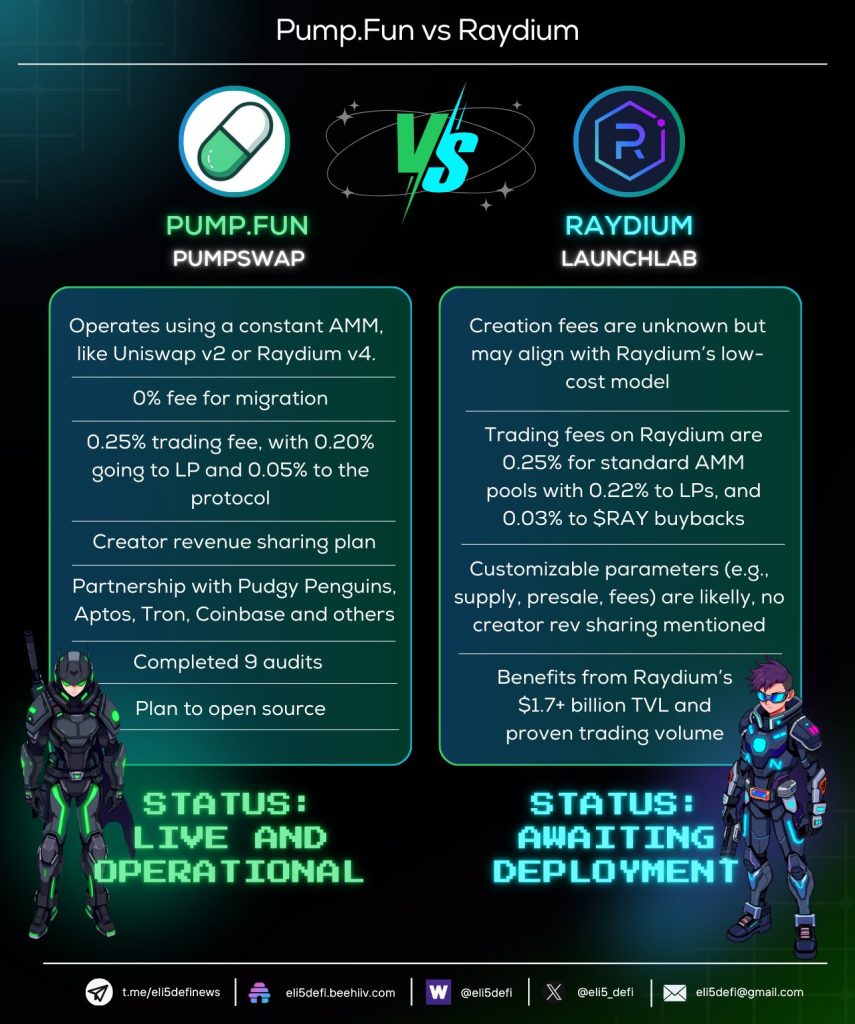
- Uses a constant product AMM model, similar to Uniswap v2 or Raydium v4
- 0% migration fees (previously 6 $SOL)
- 0.25% trading fee, split with 0.20% going to liquidity providers (LPs) and 0.05% to the protocol
- Creator revenue sharing incentives
- Notable partnerships with Pudgy Penguins, Aptos, Tron, and Coinbase’s cbBTC
- 9 completed audits from top security firms, with more underway via a public audit competition
- Plans for open-sourcing the platform in the near future
These features collectively make Pumpswap a compelling platform for both creators and investors looking to enter the memecoin market with minimal friction and maximum upside. The platform’s aggressive move toward multi-chain partnerships also signals a broader vision that extends beyond simple meme assets.
Raydium’s LaunchLab: The Challenger
Raydium, a long-standing heavyweight in the Solana DEX arena, has unveiled LaunchLab as its response to Pump Fun’s pivot to Pumpswap. While still in development, LaunchLab is positioned as a direct memecoin launchpad integrated deeply with Raydium’s established infrastructure and liquidity pools.
What we know about LaunchLab so far:
- Direct token launches on Raydium’s AMM pools (V4 and CPMM)
- Expected to have customizable parameters like supply, presale rules, and fees
- Likely to adopt Raydium’s 0.25% standard trading fee structure (0.22% to LPs, 0.03% to $RAY buybacks)
- Backed by $1.7+ billion TVL and substantial daily trading volume
- No clear confirmation of a creator revenue-sharing model yet
LaunchLab’s success will hinge on its ability to combine ease of use with powerful liquidity and visibility—areas where Raydium already excels. If LaunchLab rolls out with the same user-friendly features as Pumpswap but adds in powerful back-end tools and incentives, it could pose a serious threat.
Comparing Pumpswap and LaunchLab
The two platforms are designed with similar goals—streamlining the memecoin launch process—but they take different paths to achieve them. Here’s how they stack up across key dimensions:
- Fees: Pumpswap currently edges out with 0% migration fees and a simple 0.25% trading fee. LaunchLab’s fee model is still unknown but is expected to align with Raydium’s 0.25% AMM fees.
- Revenue Sharing: Pumpswap provides revenue-sharing mechanisms for creators. Raydium has not announced similar incentives yet, potentially giving Pumpswap a unique edge among token creators.
- Security: Pumpswap has undergone nine audits and is partnering with Cantina to crowdsource further testing. LaunchLab’s audit plans are not yet public.
- Partnerships and Ecosystem: Pumpswap’s outreach to major players like Aptos and Tron hints at long-term multichain goals. Raydium’s strength lies in its Solana-native dominance and deep liquidity.
- Technology and Infrastructure: LaunchLab can leverage Raydium’s proven infrastructure and massive TVL, while Pumpswap builds new, nimble systems tailored specifically for memecoin trading.
Ultimately, the better platform will be decided by adoption, user satisfaction, and performance metrics once LaunchLab goes live.
The Strategic Timing Behind the Showdown
The release of Pumpswap is more than a tech update—it’s a strategic pivot. As Pump Fun observed a significant drop in volume of graduated tokens in early 2025, the team saw an opportunity to create long-term sustainability by launching its own DEX. Pumpswap helps retain volume and engagement within the Pump Fun ecosystem instead of losing users to other platforms like Raydium.
Meanwhile, Raydium recognizes this potential threat and is fast-tracking LaunchLab as both a defensive and offensive move. By offering native token launches, Raydium aims to keep memecoin liquidity and attention within its own ecosystem, shielding it from user migration to third-party platforms like Pumpswap.
It’s a rare and exciting example of direct competition in DeFi—two highly specialized platforms going head-to-head not just on features, but on ideology: open-source nimbleness vs. centralized liquidity dominance.
What the Future Holds for Memecoin Trading on Solana
There’s no clear winner yet, but both platforms will shape the trajectory of memecoin trading on Solana in 2025. Pumpswap has agility, creator incentives, and a strong first-mover advantage. Raydium has institutional weight, liquidity depth, and infrastructure. The battle will come down to user adoption, creator loyalty, and on-chain performance.
Most analysts expect Pumpswap to absorb 20–30% of Raydium’s memecoin trading volume over time, especially if liquidity continues developing. But Raydium’s established presence makes a total dethronement unlikely. Should LaunchLab launch soon with flexible tokenomics and low fees, the scales could tip in Raydium’s favor quickly.
Ultimately, the competition benefits users. Both platforms are innovating rapidly, improving security, reducing fees, and optimizing trading experiences. The real winner may be the Solana ecosystem as a whole.
The rise of Pumpswap and the imminent debut of LaunchLab mark a turning point for memecoin culture on Solana. With each platform offering compelling advantages—whether it’s Pumpswap’s creator-first approach or Raydium’s battle-tested infrastructure—users now have choices. In the end, performance, liquidity, and community trust will determine who leads the next memecoin wave.
FAQs
- What is the main difference between Pumpswap and LaunchLab?
Pumpswap is a live memecoin DEX launched by Pump Fun with creator incentives, while LaunchLab is an upcoming launchpad by Raydium leveraging its existing AMM infrastructure and liquidity. - Does Pumpswap support revenue sharing for token creators?
Yes, Pumpswap offers a revenue-sharing model where creators earn a portion of trading fees, incentivizing quality token launches. - Is LaunchLab available for use yet?
No, LaunchLab has been announced but is still under development. Its features, fee structures, and launch date have not yet been officially released. - Which platform is better for launching a new memecoin?
Currently, Pumpswap offers more known benefits for creators, including lower fees and revenue sharing. However, LaunchLab may become a strong contender once fully released, especially for those valuing deep liquidity and Raydium’s reputation. - What role does Solana play in both platforms?
Both Pumpswap and LaunchLab are built on the Solana blockchain, benefiting from its high-speed, low-cost infrastructure, which is ideal for high-volume trading and token launches.