From Bonk to Bonanza: Lessons from Solana Meme Coins
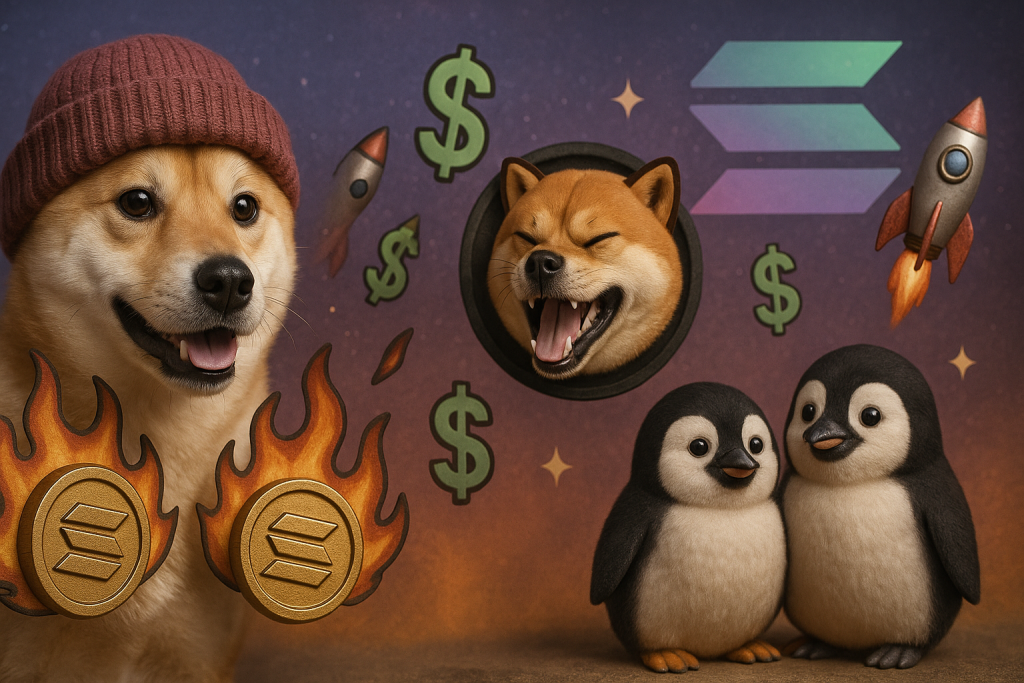
The truth is, nobody saw it coming. Not the venture capitalists with their fancy spreadsheets, not the blockchain analysts with their technical reports, and certainly not the traditional finance folks who still think crypto is “just fake internet money.” But while they were busy being serious about serious things, something absolutely wild was brewing on Solana with Solana meme coins—and it all started with a dog named BONK.
Let me explain what happened, because if you missed this particular circus, you missed one of the most fascinating case studies in community-driven wealth creation that crypto has ever produced. We’re talking about meme coins that went from literally worthless to billion-dollar market caps, developers who became accidental millionaires overnight, and communities that turned inside jokes into financial movements.
But that’s just it—calling them “just meme coins” misses the entire point. These weren’t random lottery tickets (well, not entirely). There are patterns here, lessons that any trader worth their salt should understand. Because whether we like it or not, meme coins aren’t going anywhere, and the next bonanza is probably brewing right now while you’re reading this.
The BONK Phenomenon: How an Airdropped Dog Coin Revitalized Solana Meme Coins
Picture this: It’s December 2022, and Solana is having what you might generously call a “rough patch.” FTX just imploded, taking a chunk of the ecosystem’s credibility with it. Developer morale was somewhere between “grim” and “maybe I should have stayed in web2.” The network that once promised to be Ethereum’s cooler, faster cousin was looking more like the friend who peaked in high school.
Then, out of nowhere, someone decided to airdrop 50% of a dog-themed token’s total supply to the entire Solana community. Not just the big players, not just the VCs—everyone. The initial success of Bonk Coin can be attributed to its massive airdrop strategy, where 50% of the total supply was distributed for free to the Solana community. Developers, NFT creators, DeFi users, that person who bought $20 of SOL and forgot about it—they all woke up with bags of BONK tokens.
The result? The 2022 airdrop sent Solana’s usage flying high, drawing developers and users. This kicked off a meme coin rush, with others following BONK’s lead, and money flowing in into Solana meme coins and the Solana ecosystem. But here’s where it gets really interesting—some of those developers who received what amounted to about $300 worth of BONK tokens in 2022? It’s now worth $1.3 million.
Don’t get me wrong, luck played a massive role here. But the BONK phenomenon teaches us something crucial about meme coin success: community comes first, everything else is secondary. This wasn’t your typical crypto launch where tokens get distributed to insiders and early investors. This was a genuine community gift, and the community responded accordingly.
The lesson here isn’t “just airdrop everything”—though that familiar mix of awe and unease you feel when you see those 4,000x returns certainly makes it tempting. The real takeaway is that successful meme coins tap into something deeper than speculation. They create belonging. BONK didn’t just give Solana users tokens; it gave them a shared experience, a reason to believe in the ecosystem again when everything seemed to be falling apart.
Dogwifhat’s Wild Ride: Meme Magic and Community Fundraising

If BONK was the proof of concept, then Dogwifhat (WIF) was the master class. Dogwifhat (WIF) is a memecoin on the Solana blockchain, originating from a viral image of a Shiba Inu named Achi wearing a pink hat. Now, you might be thinking, “Another dog coin? Really?” But here’s where WIF got creative in ways that make traditional marketing look like cave paintings.
The WIF community didn’t just hodl and hope—they organized. The community completed fundraising for Las Vegas Sphere showing, raising over $690,000 in USDC stablecoin donations to get their beloved dog-with-hat displayed on one of the most iconic digital billboards in the world. Think about that for a second: a meme coin community literally crowdfunded a massive marketing campaign for their token.
But that’s not even the wildest part. Dogwifhat’s remarkable climb to becoming the 29th most capitalized meme coin, boasting a market value of $4.7 billion, happened so fast that it caught even Solana’s founder off guard. WIF became the first major meme coin to surpass $1, breaking psychological barriers that had seemed impossible for meme coins.
The magic here wasn’t just in the meme—it was in the execution. The WIF community understood something that most crypto projects miss: narrative without action is just noise, but action with narrative? That’s how you build movements. They didn’t just talk about their coin being special; they made it special through coordinated community efforts that generated real buzz in the real world.
Lesson: Viral humor is cool and all, but viral humor plus real-world activation? That’s where the bonanza lives.
Slerf’s Accidental Burn: Turning a Blunder into Buzz

Now here’s a story that perfectly captures the absolute chaos that is meme coin culture. Meet SLERF, a Solana meme coin that should have been just another entry in the endless parade of animal-themed tokens. Instead, it became legendary for all the wrong reasons—or were they the right reasons?
A Solana developer accidentally burned $10 million worth of pre-sale tokens after raising that amount anonymously for a meme coin called Slerf. Let me repeat that because it’s so absurd it barely sounds real: the developer raised $10 million from investors, then accidentally deleted it. Gone. Poof. The digital equivalent of dropping your life savings down a storm drain.
In any rational market, this would be the end of the story. Investors would demand refunds, lawyers would start circling, and the project would die a quiet death of embarrassment. But meme coins don’t play by rational market rules, and that’s exactly what makes them so dangerous—and so lucrative.

Instead of collapsing, SLERF surges more than 3,700% as developer burns $10 million presale tokens. The accident became the story, the story became the meme, and the meme became the value proposition. Slerf racks up $2 billion in volume because sometimes, in the upside-down world of meme coins, the most catastrophic mistake becomes the most compelling narrative.
This is where traditional investors start pulling their hair out, and honestly, I get it. But here’s the thing: SLERF’s accidental burn created something that money can’t buy—authenticity. In a space full of calculated moves and manufactured hype, here was genuine chaos, genuine emotion, and a genuine community rallying around their hapless developer.
The lesson? Sometimes any press really is good press, especially when that press involves burning millions of dollars by accident. Good luck getting anywhere with that strategy intentionally, though.
From NFT to Token: Pudgy Penguins’ Crossover Success

While other projects were starting from scratch, Pudgy Penguins took a different approach: leverage an existing community. The Pudgy Penguins token on Solana represented something we hadn’t seen much of—a successful NFT project making the jump to the token world.
This wasn’t just another meme coin hoping to build a community from nothing. Pudgy Penguins already had brand recognition, established community ties, and—crucially—people who were emotionally invested in the penguin ecosystem. When they launched PENGU, they weren’t asking strangers to believe in their vision; they were giving existing believers a new way to participate.
The execution was masterful. Instead of abandoning their NFT roots, they used them as a launchpad. The familiar penguin aesthetic, the established social media presence, the existing holder base—it all translated into token success. Pudgy Penguins burned unclaimed Solana airdrop tokens earlier than originally planned, creating scarcity and showing they were serious about tokenomics, not just riding on brand recognition.
This crossover success teaches us something crucial: the best meme coins don’t start from zero. They build on existing cultural momentum, whether that’s an established NFT project, a viral internet meme, or—in BONK’s case—an entire blockchain ecosystem’s need for hope.
Common Threads: What Do Solana’s Top Meme Coins Have in Common?
After diving deep into these success stories, patterns start to emerge. It’s not random chaos—well, not entirely. There are consistent elements that separate the bonanzas from the rug pulls, the life-changing gains from the life-changing losses.
Community-First Distribution: Every successful Solana meme coin prioritized community over insiders. BONK’s massive airdrop, WIF’s grassroots fundraising, SLERF’s accidental democratization—they all put tokens in the hands of actual users, not just early investors.
Narrative + Action: Having a funny meme isn’t enough anymore. WIF didn’t just make people laugh; they made people act. SLERF didn’t just have a story; they had a story that demanded community response. The most successful projects combine viral content with real-world momentum.
Embracing Chaos: Traditional projects try to control their narrative. Meme coins succeed by embracing the uncontrollable. SLERF’s burn, BONK’s timing during Solana’s low point, WIF’s absurd marketing stunts—they all worked because they felt authentic in their absurdity.
Solana’s Speed Advantage: Let’s be honest—most of these stories wouldn’t work on Ethereum. The high gas fees and slow transaction times kill the spontaneous, community-driven behavior that meme coins thrive on. Solana’s technical advantages create space for the social dynamics that make meme coins possible.
Emotional Investment: The biggest winners created emotional connections, not just financial ones. People didn’t just own BONK; they owned a piece of Solana’s recovery story. WIF holders weren’t just speculating; they were part of a community fundraising campaign.
Applying the Lessons: How to Spot the Next Meme Coin Winner
The truth is, you can’t predict which specific meme coin will 100x next—anyone who tells you otherwise is either lying or delusional. But you can get better at recognizing the conditions that create bonanza potential.
Look for Community-Driven Distribution: If a project’s tokenomics look like a traditional VC playbook, it’s probably not going to have meme coin magic. The best opportunities come from projects that prioritize community ownership over insider control.
Watch for Narrative + Execution Combo: Memes are everywhere, but memes that inspire coordinated community action are rare. When you see a community actually doing things—fundraising, organizing, building—that’s when you pay attention.
Don’t Dismiss the Absurd: SLERF’s accidental burn shouldn’t have worked, but it did. Sometimes the most ridiculous stories become the most compelling investment theses. That familiar mix of awe and unease you feel when something seems too crazy to work? That might be exactly the signal you’re looking for.
Follow the Technical Infrastructure: Meme coins need low-friction participation. Projects launching on chains with high fees or slow speeds are fighting an uphill battle against their own success.
Emotional Resonance Over Logic: The best meme coins tap into emotions that people didn’t even know they had. BONK gave Solana users hope when they needed it most. WIF gave people a reason to laugh and dream big. What emotions is the next big meme coin going to unlock?
The Real Bonanza Lesson
Here’s what most people miss about Solana’s meme coin success stories: they’re not really about getting rich quick (though some people certainly did). They’re about communities figuring out new ways to create and distribute value outside traditional systems.
BONK revitalized an entire blockchain ecosystem through community ownership. WIF showed how decentralized communities can execute marketing campaigns that would make traditional agencies jealous. SLERF proved that authentic chaos can be more valuable than manufactured perfection. Pudgy Penguins demonstrated how established communities can evolve and expand their influence.
These aren’t just funny animal tokens—they’re experiments in community ownership, viral marketing, and alternative value creation. The money is just how we keep score.
But that’s just it—while everyone’s focused on the gains, the real innovation is happening in how these communities organize, coordinate, and create value together. The next bonanza won’t just make people rich; it’ll teach us something new about what’s possible when communities get powerful tools and decide to do something interesting with them.
Don’t get me wrong, the financial returns are absolutely wild, and anyone who caught these waves deserves their gains. But if you’re only looking at meme coins as lottery tickets, you’re missing the bigger picture. These are case studies in community dynamics, viral growth, and alternative economic systems—wrapped in jokes about dogs wearing hats.
The truth is, we’re still in the early days of figuring out what’s possible when communities can create and control their own financial instruments. Solana’s meme coin bonanza might look like chaos from the outside, but from the inside, it’s starting to look like the future of how communities organize around shared value and shared dreams.
So the next time someone dismisses meme coins as “just gambling” or “not real innovation,” remind them that some of the most interesting experiments in decentralized community building are happening right there in the chaos. The bonanza isn’t just financial—it’s cultural, social, and maybe even revolutionary.
Good luck getting anywhere in the next wave of community-driven value creation without understanding these lessons. The meme coin bonanza is just getting started.